Principles of financial asset management: Fundamentals and basic concepts
Principles of financial asset management: Fundamentals and basic concepts



Principles of financial asset management: Fundamentals and basic concepts

The Importance of Cyclical Asset Valuation in Investment Decisions

Managing Fixed vs. Variable Assets: Understanding the Differences

Digital transformation is not just a passing trend, but a cornerstone of modern economic and social development. In the Arab world, digital transformation is emerging as an effective tool to overcome economic and political challenges and provide new opportunities for growth and innovation.

Central Bank Digital Currencies (CBDCs) are digital versions of national currencies issued by central banks. Unlike cryptocurrencies, CBDCs are centralized and backed by governments, offering a stable digital payment system.

In an era where technology and innovation are rapidly transforming our daily lives, the emergence of sophisticated AI agents is reshaping how we interact with digital environments. Among these advancements, Manus by Monica has emerged as a trailblazer, offering users a unique blend of functionality, human-like interaction, and personalization. This article delves into the features, capabilities, and potential impact of Manus, making it a notable player in the AI landscape.

Your computer browses the internet differently with Fellou - it works while you sleep, completing tasks you'd normally spend hours on. This AI-powered browser represents a fundamental shift from passive information consumption to active task execution.

Software development is a complex, collaborative effort that involves structured methodologies and specialized teams working together to build high-quality software solutions. Successful software projects depend on choosing the right development process and assembling the right team structure to match the project’s goals.
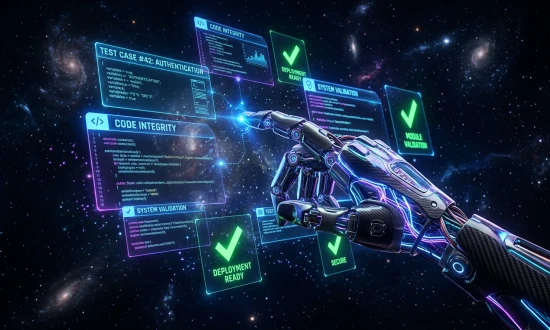
Software systems today are more complex, interconnected, and fast-evolving than ever before. Businesses are under constant pressure to deliver high-quality digital products at speed, which places tremendous demand on software testing teams. Traditional manual testing—while essential—can no longer keep pace with rapid development cycles and increasing user expectations. This is where Artificial Intelligence (AI) is transforming the landscape of Software Testing and Quality Assurance (QA). AI brings intelligence, automation, and predictive capabilities that significantly enhance how teams validate software. It reduces repetitive tasks, improves accuracy, and provides insights that were previously difficult or impossible to uncover.