

Logo

Blog

Images

Blog

Blog Images
24 Nov

What Is FinTech?

FinTech, short for Financial Technology, refers to innovative technologies that improve, automate, or replace traditional financial services. It combines finance + technology to deliver faster, cheaper, and more accessible financial products. FinTech is reshaping how people bank, pay, borrow, invest, and manage money.


Blog Images
08 Apr

The IoT Software Ecosystem: Billions of Devices, One Coherent Platform

The Internet of Things has crossed 18 billion connected devices. Managing the software ecosystem that spans cloud backends, edge gateways, and constrained microcontrollers is the defining infrastructure challenge of the embedded era — and the industry is finally converging on coherent answers.

Blog Images
08 Apr

Observability and Software Quality Engineering: You Can't Fix What You Can't See

As software systems grow more complex and distributed, the traditional approach of monitoring predefined metrics has given way to a new discipline: observability. Understanding the internal state of your system from its external outputs is not just a technical nicety — it is the prerequisite for reliability at scale.

Blog Images
20 Apr

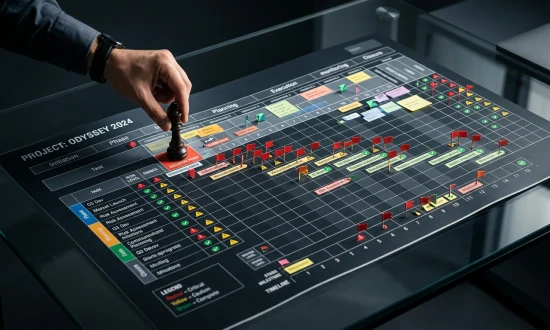
Risk Management in Software Project Delivery

How modern software teams identify, quantify, and actively mitigate risk before it becomes a crisis — and why most still don't do it well enough.

Blog Images
04 May

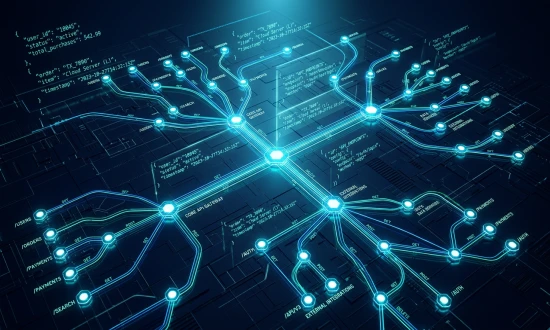
API Testing — Why It's the Most Critical Layer of Modern QA

The modern software application is rarely a single, self-contained system. It is a network of interconnected services, each communicating with others through Application Programming Interfaces — APIs. Your mobile banking app talks to a transaction service. That service talks to a fraud detection engine. The fraud engine talks to a third-party identity verification provider. At every junction, an API is the bridge. When APIs work correctly, the user experience is seamless. When they do not, the consequences cascade: transactions fail, data is lost or corrupted, security is compromised, and trust is broken.

Blog Images
10 May

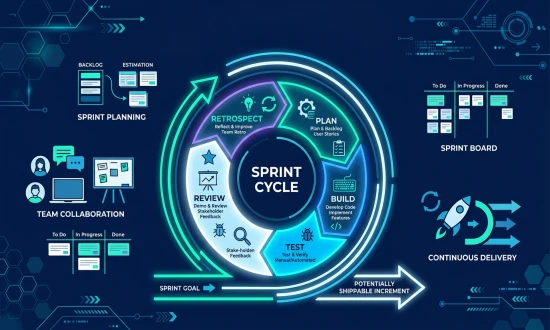
Agile Methodologies — Delivering Value in a World That Won't Stop Changing

Software development has always been an exercise in managing uncertainty. Requirements that seemed clear at the start of a project evolve as stakeholders see early prototypes. Market conditions shift, rendering planned features obsolete before they ship. Technical discoveries reveal that the architecture assumed at the outset will not support what the product actually needs to become. For most of the industry's history, the standard response to this uncertainty was to try to eliminate it — to spend months gathering requirements, documenting them exhaustively, designing the complete system upfront, and then executing the plan as specified.

Blog Images
17 May

The Invisible Thread: How RFID Technology Is Quietly Reshaping Our World

Every time you tap your transit card to board a train, wave your badge to enter a secure building, or watch a retailer instantly count thousands of items in their warehouse, you are witnessing the quiet power of Radio Frequency Identification — better known as RFID. It is one of those technologies that works best when you barely notice it at all.

Blog Images
17 May

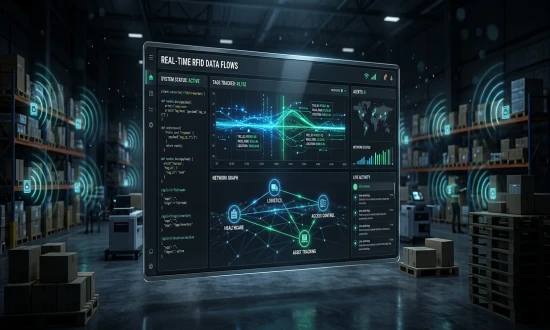
RFID in Software: From Raw Signal to Smart Application

When most people think about RFID, they picture the hardware: the tiny chip embedded in a label, the handheld reader scanning a warehouse shelf, the antenna mounted above a highway lane. But hardware alone does nothing useful. It is the software layer — the middleware, APIs, databases, and analytics platforms built on top of raw RFID signals — that transforms a stream of tag reads into business intelligence, automated workflows, and real-time decisions.